
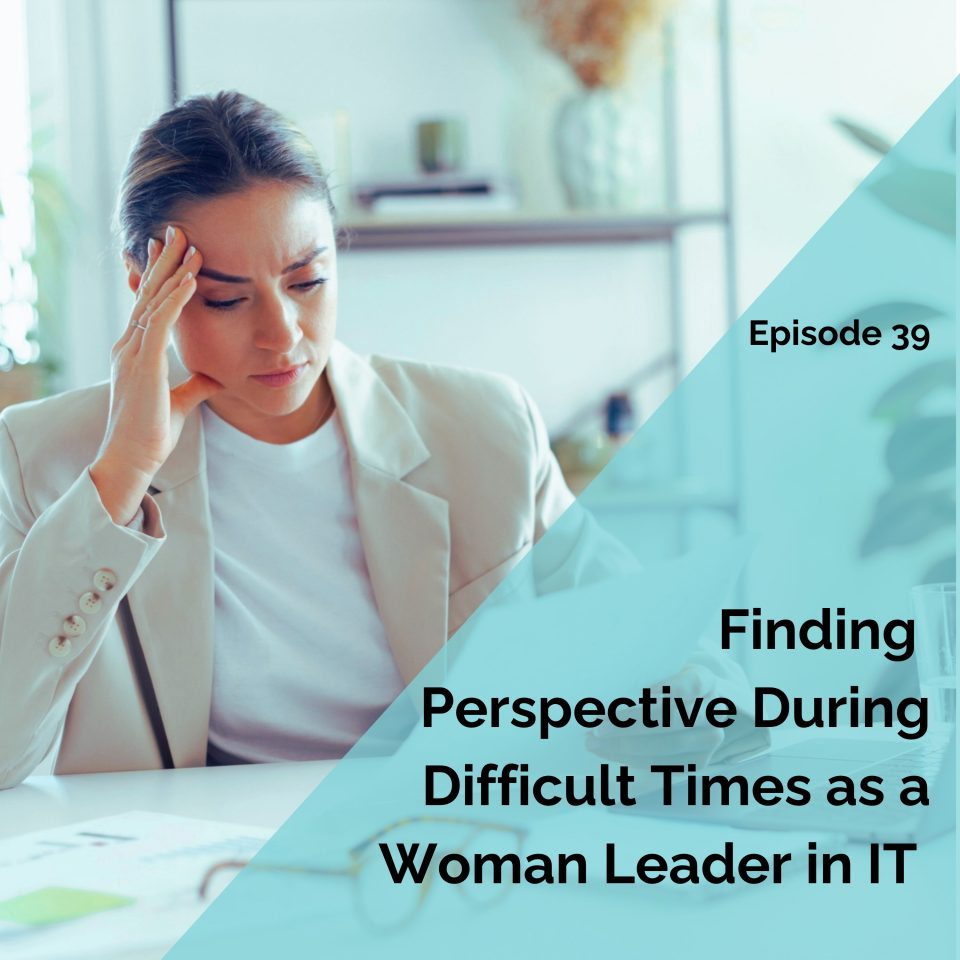
Is there something happening in your IT career right now that’s weighing heavily on you?
You’re worried about the next reduction in force and who will be affected.
Perhaps another reorganization has you wondering what will happen to you and the team you’ve developed.
Your budget’s been cut again, but the expectations haven’t changed.
Or maybe you’re in a position that doesn’t align with your strengths.
You don’t love the work.
Or maybe you and your manager just don’t see eye to eye.
Some days, you find yourself wondering, How long can I keep doing this?
I remember asking myself that same question.
And what helped me through one of the most difficult positions in my career was perspective.
It didn’t change what I was going through. But it helped me see that this difficult situation was only one part of my life—not all of it.
Today, I’m sharing what that experience taught me about perspective—and how it can help you when you’re going through a challenging time in your career.
How to Navigate What You Can’t Control in Your Career
I started my career as a software engineer, and I absolutely loved coding and solving business problems. After about ten years, I decided I was ready to move into leadership.
I loved building relationships with my customers, understanding their challenges, and developing solutions that helped them in their businesses. Over time, I began managing more complex projects and eventually leading the teams who did the work.
I loved what I was doing.
I worked with intelligent, hardworking, talented people, and I felt grateful for the opportunity to lead them.
I was happy. I felt fulfilled. And I could see myself continuing down this path in my career.
And then rumors about a reorganization started.
I had this feeling that whatever was coming was going to affect me.
I tried talking with my Director to see if he would share anything about what was happening, but all he would tell me was that the changes were going to be really exciting.
Except I had no idea what really exciting meant for me.
Would I still have the same role? Would I still lead my team? Would I even be doing the kind of work I loved?
I didn’t know.
And as the weeks went by without any answers, I started to worry.
If you’ve ever waited for a reorganization to be announced, you probably know how unsettling that waiting can be.
You keep doing your job. You keep showing up for your team. But in the back of your mind, you’re wondering what’s going to happen—and how much of your working life is about to change.
That’s exactly where I was.
I had already planned to take some time off to visit one of our daughters, so before I left, I asked my Director if he would please call and tell me about the changes before they were announced. He agreed.
And I’ll never forget that phone call.
My Director and CIO were both on the line, and they told me they wanted me to become the manager of Hosting.
Manager of Hosting?
I remember feeling incredibly disappointed.
My Director had spent weeks telling me how exciting these changes were going to be. But this wasn’t a position I would have sought out for myself. I had no experience leading a Hosting organization, and it wasn’t an area of IT I had ever considered moving into.
I remember thinking, How is this exciting?
They had already selected another manager to take over my previous position, so it didn’t feel as though I had much of a choice if I wanted to stay in management.
I felt caught off guard and pressured to make a decision about a position I wasn’t sure I even wanted.
After talking with them more about the role, I agreed to accept it—but with a large dose of hesitation.
And if I’m being completely transparent, I also felt betrayed by my Director. He had built up my expectations for weeks, and what I had imagined was very different from what I was being offered.
But I decided I was going to give the position a chance and do the best I could with it.
Within a few months, I was told I needed to cut my budget by a third.
That meant going through our hardware contracts and making some very difficult decisions about what we could do without.
Several members of my team were at an age where they could retire, and they chose to leave. We weren’t given approval to backfill their positions, which meant redistributing their work among the people who remained.
And they were not happy about it.
I couldn’t blame them. They were being asked to take on more work because of decisions they hadn’t made and couldn’t control.
And even after several people had already left, we went through a reduction in force that affected another member of my team.
So I was trying to lead people who were frustrated and worried, manage a significantly smaller budget, and keep the work moving forward with fewer people.
And on top of all of that, I simply didn’t enjoy the work the way I had in my previous positions.
It was hard.
If you’re in a position like that right now, you may know what that feels like.
You get up. You go to work. You handle the next problem. You support your team. You do what’s expected of you.
But the job starts taking up far more emotional space in your life than you want it to.
That’s what was happening to me.
After about a year, I realized I couldn’t control many of the circumstances I was dealing with at work.
But I could change how much of my life I allowed them to consume.
That realization helped me begin looking at my situation differently.
When I stepped back, I realized that not everything at work was going badly.
There were actually some really positive things happening within IT.
A work management system had been implemented that gave our senior management visibility into all of the work we were doing. For the first time, we could clearly show how much customer-funded work we had compared with IT-funded work—something we had struggled with for years.
Our IT financial processes had also been streamlined, which improved budget management for work package owners.
And then I started looking beyond work.
There was so much of my life that I was grateful for.
I had my health. My family. My church community and opportunities to serve. And friendships and relationships that mattered deeply.
My job was difficult, but overall, my life was good.
That distinction became really important to me.
I started becoming more intentional about setting aside the difficulties of the workday when I came home and focusing more of my energy on the parts of my life where I did have some control.
I planned weekend activities with friends and family. I made room for things that brought me happiness and gave me something to look forward to outside of work.
None of that made the problems at work disappear.
I still had the same job. The same responsibilities. The same challenges were waiting for me when I went back to work.
But they stopped defining how I felt about my entire life.
And eventually, that position ended too.
Looking back, one of the things that helped me get through it was recognizing that what I was experiencing at work was only one part of my life—not all of it—and it wasn’t going to last forever.
So if something in your career is weighing heavily on you right now, I’m not going to tell you to just look at the bright side.
Because what you’re going through matters.
But it isn’t the only thing that matters.
Take a step back this week and ask yourself: What else is true about my life right now?
What is going well?
Who are the people that bring joy and meaning to your life?
What do you have to look forward to?
And where can you put a little more of your energy into the things you actually can control?
Your circumstances may not change tomorrow. But having perspective can keep them from overshadowing everything else in your life.
Stay empowered and lead assertively!